The Tax That Cancels Out Long Branch's Price Advantage Over Port Credit
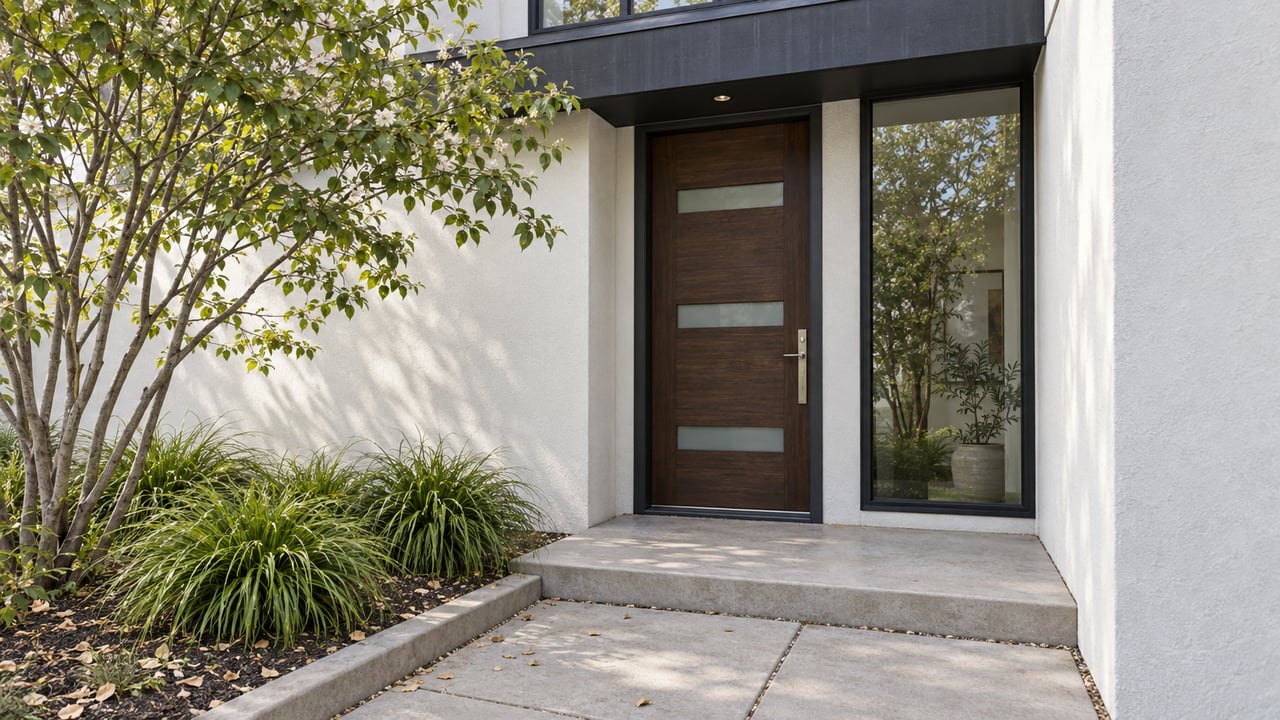
A detached home in Long Branch can list for $150,000 less than a comparable detached home in Port Credit. Buyers see that gap on the search results page and read it as the whole story. It isn't. By the time a lawyer sends the closing statement, a chunk of that apparent savings, and at some price points all of it, has already been erased by a tax that only one side of the Etobicoke Creek border charges.
That tax is Toronto's Municipal Land Transfer Tax. Mississauga does not have an equivalent. Every other GTA municipality most buyers cross-shop against Toronto, including Oakville, Brampton, and Vaughan, also skips it. Toronto is the only city in Ontario that layers a second land transfer tax on top of the province's, and that structural difference changes the real math of comparing a home in Long Branch, Mimico, or New Toronto against one in Port Credit far more than most listing-price comparisons let on.
Long Branch sits at the western edge of Toronto's south Etobicoke lakeshore, pressed right up against the Mississauga border near Etobicoke Creek. Freehold homes here, many on the quiet, tree-lined streets around Long Branch Park, currently run from roughly $900,000 at the entry point to about $1.5 million at the top, with the original early-1900s summer-resort cottages that survive on the lakefront streets trading in their own smaller, harder-to-comp market.
Move east along the same lakeshore and Mimico picks up the market. The village core along Mimico Avenue, home to independent bakeries, cafes, and the neighbourhood's branch library, still has Victorian-era detached homes and wartime bungalows trading between roughly $1.2 million and $2.2 million depending on renovation and lot, while the waterfront condo towers along Humber Bay Park West price one-bedroom units from about $550,000 and three-bedroom penthouses well past $1.3 million. The Mimico GO Station gets commuters to Union in ten to fourteen minutes, which is a meaningful chunk of why the village side has climbed as high as it has.
Port Credit, across the border in Mississauga, is currently trading detached homes in a range that most local pricing sources place somewhere between roughly $1.3 million and $2.1 million, with the premium streets closest to Lakeshore Road and the waterfront commanding the top of that band. On paper, a buyer choosing between a $1.5 million detached home in Mimico and a $1.5 million detached home in Port Credit looks like they're choosing on lifestyle alone. They aren't.
Every property purchase in Ontario carries the province's Land Transfer Tax, calculated on a marginal schedule: 0.5% on the first $55,000, 1.0% on the portion from $55,000 to $250,000, 1.5% on the portion from $250,000 to $400,000, and 2.0% on the portion from $400,000 up to $2 million. That tax applies whether the home is in Mimico or Port Credit. Nobody escapes it.
What changes at the Etobicoke Creek border is what gets added on top. Since 2008, the City of Toronto has charged its own Municipal Land Transfer Tax, applied to every property purchase within city limits in addition to the provincial tax. Below the luxury threshold, Toronto's municipal brackets mirror the province's dollar for dollar. That means a buyer purchasing in Toronto is effectively paying the same marginal schedule twice, once to the province and once to the city, while a buyer purchasing the identical home just across the border in Mississauga pays it once.
The clean way to see how much this actually costs is to run the official brackets against price points that match what's currently listing in these three Toronto lakeshore neighbourhoods and in Port Credit.
| Purchase price | Total land transfer tax in Toronto (provincial + municipal) | Total land transfer tax in Mississauga (provincial only) | Extra cost of buying in Toronto |
|---|---|---|---|
| $900,000 | $28,950 | $14,475 | $14,475 |
| $1,500,000 | $52,950 | $26,475 | $26,475 |
| $2,000,000 | $72,950 | $36,475 | $36,475 |
Because Toronto's municipal bracket mirrors the province's below the luxury threshold, the extra cost of buying in Toronto is not some separate calculation. It is exactly equal to the provincial tax amount itself, doubled. A $900,000 entry-level Long Branch freehold and a $900,000 entry-level Port Credit purchase are not $900,000 purchases with identical closing costs. The Long Branch buyer owes an extra $14,475 that never shows up on the listing. At $1.5 million, the kind of price point that covers most Mimico village detached homes and a large share of Port Credit's inventory, that gap is $26,475. That's real money that would otherwise go toward the down payment, the moving budget, or the first year of carrying costs, not toward anyone's equity.
Both governments offer a rebate, but only to first-time buyers. Ontario's provincial rebate covers up to $4,000, enough to fully offset the tax on a purchase up to roughly $368,000. Toronto's municipal rebate covers up to $4,475 on top of that, enough to offset the municipal tax on a similar low band. Neither rebate does much at the price points that describe Long Branch, Mimico, New Toronto, or Port Credit today, and neither applies at all to a buyer who has owned a home anywhere before.
That second point matters more for the audience actually shopping this comparison. A family already established in South Mississauga or elsewhere in the GTA and moving up to a larger home, whether they're looking at Long Branch for the shorter commute or staying on the Mississauga side in Port Credit, does not qualify as a first-time buyer on either side of the border. The full gap in the table above applies to them without any rebate to soften it.
Toronto City Council passed an amendment in December 2025 introducing new graduated Municipal Land Transfer Tax rates for high-value residential properties, and those rates took effect for closings on or after April 1, 2026. The new brackets apply only to the portion of a purchase price above $3 million on a property with one or two single-family residences, at rates the city has set between 4.4% and 8.6%, layered on top of the standard structure below that threshold. The provincial tax is untouched. This is a municipal-only increase, and it only bites once a purchase crosses into eight figures on the lower end.
Most of what's currently listing in Long Branch, Mimico, and New Toronto sits well under that $3 million line, so the April 2026 change doesn't touch today's typical transaction in those neighbourhoods directly. What it does is confirm the direction the gap has been moving since 2008: Toronto keeps adding cost at the top of its market rather than closing the distance with its neighbours. Anyone shopping the upper end of the south Etobicoke lakeshore, where waterfront lots and larger renovated properties can push past $2 million and are only getting closer to that $3 million line as the market moves, is shopping a ceiling that just got more expensive to cross, while the equivalent price point in South Mississauga carries no such second tax at any level.
A listing price comparison between Long Branch and Port Credit, or between Mimico and Port Credit, is not a cash-to-close comparison. The honest version of that comparison adds the marginal provincial and municipal brackets to whatever the Toronto side is asking, and only the provincial bracket to whatever the Mississauga side is asking, before deciding which one is actually the better number. At $900,000 that's a $14,475 swing. At $1.5 million it's $26,475. At $2 million it's $36,475. A Toronto listing that looks $50,000 cheaper than its Port Credit counterpart can turn out to cost more in total cash required at closing once that second tax is added in, depending on exactly where the two prices land relative to each other.
Does the tax gap apply to condos in Mimico or New Toronto, not just detached homes? Yes. The Municipal Land Transfer Tax applies to any residential purchase within Toronto's boundaries, condo or freehold. A $650,000 Mimico waterfront condo carries the same doubled marginal structure as a detached home at that price point, just scaled to a lower number.
Is there any relief if this is a family's first purchase, even if they've rented in Toronto or Mississauga before? The rebate rules are about ownership, not residency. A buyer who has never owned a home anywhere, in Canada or abroad, can typically claim both the provincial and Toronto municipal rebates regardless of how long they've rented in either city. A buyer who has owned before, anywhere, does not qualify on either side.
Does Mississauga have any land transfer tax at all? Yes, just the one. Every Ontario municipality is subject to the province's Land Transfer Tax. Mississauga, along with Brampton, Vaughan, Markham, and Oakville, simply does not add a second municipal layer on top of it the way Toronto does.
Comparing Long Branch to Port Credit, or Mimico to Lakeview, is a real decision with real tradeoffs in commute, lot size, and lifestyle. The tax line shouldn't be the part that surprises anyone after the fact. If you're weighing a move across that border and want the actual cash-to-close numbers run against specific listings you're considering, on either side of Etobicoke Creek, the Peterson Team can walk through that comparison with you before you write an offer, not after.
October 1, 2026
September 24, 2026

September 17, 2026

September 10, 2026
September 3, 2026
August 27, 2026
August 20, 2026
August 13, 2026
August 6, 2026
We strive to educate and empower our neighbors and clients in making one of their biggest investments, purchasing or selling a home.