The Real Cost Of Lorne Park's Tree Canopy When You're Planning A Rebuild
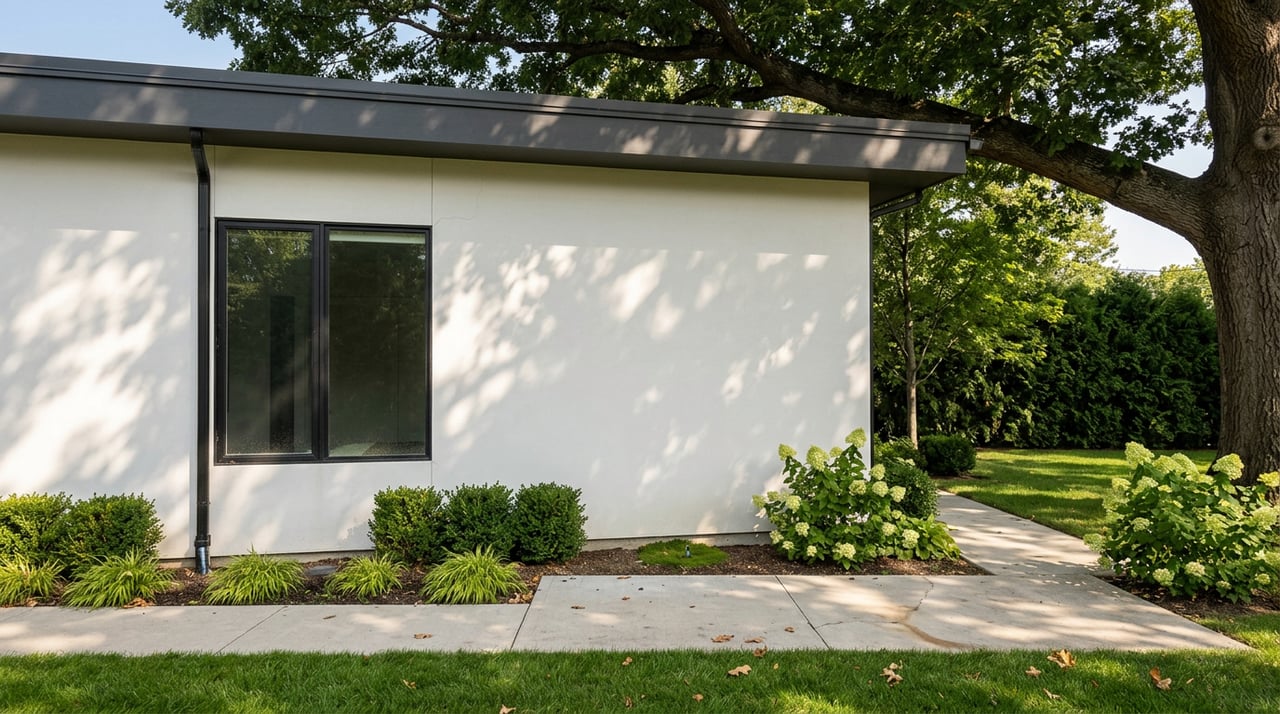
Ask anyone shopping for a teardown lot in Lorne Park what the neighbourhood costs and they will tell you a price per square foot, a lot frontage, maybe a school catchment. What almost nobody prices in is the canopy overhead. The 100-year trees that make Lorne Park worth the premium are also, under Mississauga's own bylaw, the thing that slows your permit, adds to your budget, and decides how much of your lot you actually get to build on.
That is not a knock on the neighbourhood. It is the trade you are making when you buy here, and it is worth understanding before you write an offer, not after your arborist report comes back.
Mississauga's Private Tree Protection By-law is not a suggestion. It applies to any tree on private property measuring 15 centimetres, roughly six inches, in diameter or larger, and that threshold catches a lot more of a mature Lorne Park lot than most buyers expect. A tree that size is typically well-established and semi-mature, not the kind of sapling you can clear on a Saturday afternoon.
For anyone planning a rebuild, the City requires an arborist report for all development and construction projects, whether or not the tree in question looks like it is standing in the way. Once you apply, the fee structure is fixed and public. The base permit fee is $399.77 including HST for the first tree, and each additional healthy tree adds $139.72 including HST. Dead or dying trees carry no fee, but you still have to file an application to remove them.
Then comes replacement. The City requires one new tree for every 15 centimetres of diameter removed. Its own example makes the scale clear: take down a single 45 centimetre tree, roughly 18 inches across, and you owe three replacement trees, not one. The City holds a security deposit on those replacements for a full year and only refunds it after an inspection confirms the new trees survived.
None of this is a fine for doing something wrong. It is the standard cost of building on a lot that already has trees on it, and in Lorne Park, that describes almost every lot.
| Requirement | What it means for a rebuild |
|---|---|
| 15 cm diameter threshold | Applies to most mature trees on an established lot, not just old growth |
| Arborist report | Mandatory for any development or construction project |
| Base permit fee | $399.77 (HST included) for the first tree |
| Each additional tree | $139.72 (HST included) |
| Replacement ratio | One tree per 15 cm of diameter removed |
| Security deposit | Held for one year, refunded after inspection confirms survival |
Lorne Park is not one lot type. It is a handful of distinct pockets, and the bylaw hits each one differently because the trees themselves are different ages and sizes.
Whiteoaks of Jalna carries the neighbourhood's deepest lots and its oldest canopy, the kind of century-old growth that gives Lorne Park its comparison to Toronto's most established estate streets. That density of mature trees is exactly what a full rebuild has to clear before a foundation goes in, and because the replacement ratio scales with trunk diameter, a handful of legacy trees in the 40 to 60 centimetre range can obligate a dozen or more replacement plantings before you have finalized a floor plan.
Watercolours, built out in the early 2000s on more standard 50 to 60 foot lots, is a different equation. The trees there are younger and smaller in caliper, which means fewer of them cross the 15 centimetre threshold and the ones that do carry a lighter replacement obligation. A teardown in Watercolours moves through the same bylaw faster and for less money, simply because the canopy hasn't had as long to grow.
Lorne Park Estates sits at the far end, with irregular ravine and lakefront lots on private roads. The private road status does not exempt anything. The bylaw applies to private property across the city regardless of whether the street itself is publicly maintained, so a ravine lot's old growth is subject to the same permit, fee, and replacement process as anywhere else in Mississauga.
The upshot is that the priciest pocket of the neighbourhood is not just the priciest lot to buy. It is structurally the most bylaw-intensive pocket to build in, and that is a cost differential most buyers never see until their builder walks the site.
Run the numbers on a modest scenario. A rebuild that needs to clear four mature trees over 15 centimetres to make room for the new footprint owes $399.77 for the first tree and $139.72 for each of the next three, which comes to $818.93 in permit fees alone before a single branch comes down and before the cost of the removal itself.
That is the easy part. If those four trees include anything close to the City's own 45 centimetre example, you are not planting four replacements, you could be planting nine, ten, or more, sourced as shade-bearing native species at least 1.8 metres tall if evergreen or 6 centimetres in diameter if deciduous, since ornamentals like Japanese maples or junipers do not qualify. Add the site work to find room for that many replacement trees on a lot where the whole point was to clear space for the new build, and you start to see why custom home builders working in these south end neighbourhoods talk about tree conditions in the same breath as lot width, setbacks, and grading, all site factors that shape the design before a floor plan is drawn.
This is math you can do before you ever put in an offer. Nobody at the listing table is going to do it for you.
Custom home lots in Lorne Park are trading in the range of $1.8 million to $3.5 million and higher as of 2026, and that range already reflects the neighbourhood's premium for privacy, school catchment, and lake proximity. What it does not automatically reflect is how much of your post-closing budget and calendar the canopy itself will claim, and that number depends entirely on which pocket of the neighbourhood you land in.
Does the bylaw apply to dead or hazardous trees? Yes, an application is still required even when no fee applies, and the City recommends confirming a tree's condition with a certified arborist before assuming it qualifies for the no-fee path.
Does being on a private road in Lorne Park Estates change anything? No. The Private Tree Protection By-law applies to private property across Mississauga regardless of whether the street itself is city-maintained or privately held.
Can I speed up the permit process? The City reviews arborist reports and applications on its own timeline, so the most reliable way to protect your schedule is to start the tree assessment before you close, not after, especially if a rebuild is part of your plan.
If you are weighing a teardown lot in Lorne Park, or trying to compare what a similar budget actually buys across Whiteoaks of Jalna, Watercolours, and Lorne Park Estates, that is exactly the kind of pocket-by-pocket read the Peterson Team walks families through before an offer goes in. Start your family's next chapter with a conversation that accounts for the whole lot, canopy included.
September 24, 2026

September 17, 2026

September 10, 2026
September 3, 2026
August 27, 2026
August 20, 2026
August 13, 2026
August 6, 2026
August 6, 2026
We strive to educate and empower our neighbors and clients in making one of their biggest investments, purchasing or selling a home.