Sheridan's Growth Node Status Isn't a Warning Sign. It's Priced Into Every Sale.
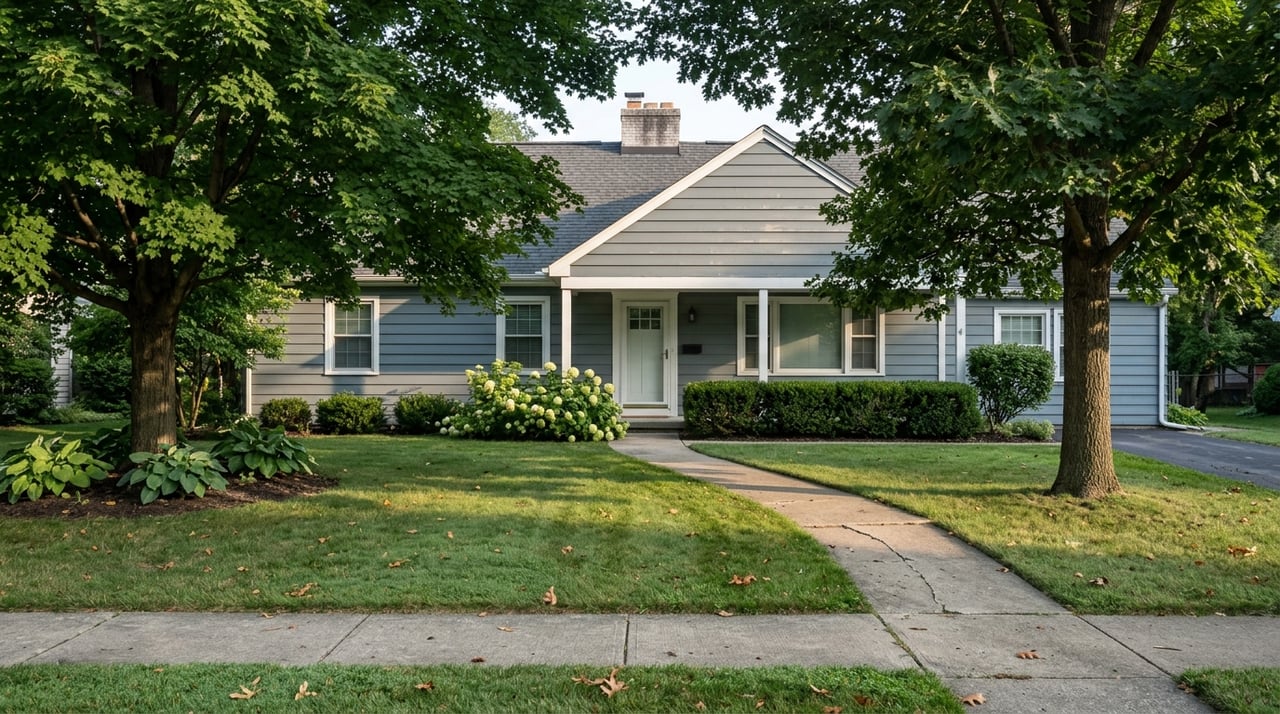
What does it actually mean when a listing description calls a Mississauga street "quiet and established" if the city's own planning department has already zoned the surrounding blocks for towers?
That's the question a Sheridan buyer runs into somewhere between the open house and the title search. The neighbourhood tucked between Dundas Street East, Winston Churchill Boulevard, the Credit River and the QEW reads like classic Mississauga suburbia: bungalows from the 1960s next to newer builds, a mix of mature trees and parks like Thornlodge Park and Sheridan Park, streets built for families who plan to stay. But Sheridan also carries an official designation most buyers never see until they go looking for it: the Sheridan Growth Node, a Strategic Growth Area where the city has decided future population growth should be concentrated. Right now that designation is turning into cranes, and understanding why the neighbourhood is absorbing that density without losing its market pull is the actual story behind Sheridan's numbers.
The clearest evidence sits at the intersection of Erin Mills Parkway and Lincoln Green Way, where the mall most longtime residents still call Sheridan Mall, and more recently Sheridan Centre, is being rebuilt as Sherwood Village. The KFC and Taco Bell that have occupied that corner for at least two decades are being demolished to make room for a new apartment building. A second building is planned near the rear of the property on Fowler Drive. Combined, the two structures will bring 631 residential units to a site that first opened as an indoor mall in 1969, back when the community around it was still new enough that "Sheridan" was briefly the leading candidate for the name of the city that became Mississauga in 1974.
Developer Dunpar Homes has said the shopping centre itself will stay, with Metro anchoring the grocery component, while housing wraps the perimeter. That's a meaningfully different story than a mall simply closing. It's a mall being kept alive by attaching housing to it, which only works because the land underneath sits inside a zone the city has already committed to intensifying.
The rear-lot building on Fowler Drive recently cleared another hurdle: Mississauga's Planning and Development Committee recommended designating that portion of the site a Class 4 area under provincial noise guidelines, a step required specifically because future residents will live near the mall's rooftop HVAC equipment, refrigeration systems, loading activity and traffic along Erin Mills Parkway. That designation applies to the new construction going up on the site, not to existing resale homes on nearby residential streets, but it's a useful signal for buyers: the city is actively managing the friction between old commercial land uses and new residential density in this specific pocket of Sheridan, which tells you how seriously the growth plan is being executed.
The mall redevelopment isn't the only intensification underway in the Growth Node. Separately, at 1970-1980 Fowler Drive near the Sheridan Centre bus terminal, city councillors have endorsed a proposal from Starlight Capital, designed by Core Architects, to add a 24-storey rental tower with 275 apartment units to an existing apartment community. The site already has a Residential High-Rise designation, but the proposed tower exceeds the area's standard 18-storey height limit, which is why it needed site-specific council approval rather than simply proceeding as-of-right.
What stands out in the planning record is how little friction the project generated locally. A virtual community meeting drew only two residents, and one of them reportedly supported a taller building because it would give future tenants a view of Lake Ontario. City staff also noted that existing water, wastewater and transportation infrastructure can already support the added density, including proximity to MiWay's University Express route. The project still needs final council approval and the developer still has to secure site plan approval, land severance approval and building permits, so this isn't finished, but it's far enough along that a buyer researching Sheridan today should treat it as part of the neighbourhood's near-term reality rather than a distant possibility.
Here's the mechanism that ties these two projects together and explains why they aren't dragging down demand for the low-rise homes nearby. Mississauga, as a fully built-out city, has essentially no open land left for new freehold subdivisions. When a city in that position needs to accommodate population growth, it has two options: redevelop underused commercial and multi-residential sites, or add density within existing neighbourhoods. Sheridan's Growth Node designation channels that pressure into the mall property and the aging apartment stock near the bus terminal, which are the sites best suited to absorb height and unit count without touching the established detached and bungalow streets around them.
That's the part of the story a headline price doesn't capture. The towers aren't replacing single-family homes. They're replacing a struggling mall corner and an aging low-rise apartment complex, which means the supply of detached and semi-detached houses in Sheridan's low-rise interior stays essentially fixed while the city adds transit access, retail investment and infrastructure upgrades around the edges. Scarcity plus new nearby amenity investment is a combination that tends to support resale value rather than erode it, which is a different outcome than buyers often assume when they hear "growth node" and picture construction dust on their own street.
The Ontario real estate outlook for 2026 was, broadly, a buyer's market story. Industry forecasts published in January 2026 projected the average Mississauga residential sale price would rise only about 3 percent for the year after falling 6 percent in 2025, with the city still working through a 14.7 percent jump in total listings. Mississauga's most recent market report, released in August 2026, put the city's overall MLS composite benchmark price at roughly $880,000, down about 5 percent year over year, with roughly five months of inventory on the market and average listings sitting for 32 days.
Sheridan is not tracking that citywide pattern. As of mid-August 2026, detached homes in Sheridan were selling for an average of $1,322,800, spending an average of 28 days on the market before selling. Looked at across the wider Sheridan resale market, houses, condos and townhomes combined, homes were selling at a 96.2 percent sale-to-list price ratio, with 7.7 percent selling above asking, a rate above the Mississauga average, and Sheridan ranked second out of 26 Mississauga neighbourhoods on sold-data performance covering speed and price achieved. In a year when the wider city was absorbing extra inventory and softening prices, Sheridan's housing stock was still moving quickly and close to asking.
| Metric | Sheridan (detached) | Mississauga (citywide) |
|---|---|---|
| Average price | $1,322,800 | MLS composite benchmark ~$880,000 |
| Days on market | 28 | 32 |
| Year-over-year price trend | Holding above city trend | Down ~5% |
| Sale-to-list ratio | 96.2% | Balanced market conditions |
That gap is the tell. A neighbourhood absorbing active tower construction on two fronts shouldn't, in theory, be outperforming a softening citywide market on speed and price. The Growth Node designation is doing the opposite of what most buyers expect from a density label: it's protecting the value of the existing housing stock by directing new supply somewhere else.
If you're comparing Sheridan against a neighbourhood like Lorne Park or Mineola, which don't carry a comparable Strategic Growth Area designation, the calculation is genuinely different, not just a matter of price per square foot. A few things worth asking before you write an offer:
None of this is a reason to avoid Sheridan. If anything, the research points the other direction: a neighbourhood that's absorbing city-directed growth on underused commercial land while its low-rise stock keeps selling fast and close to asking is a neighbourhood where planning policy and market performance are working in the same direction, not against each other.
Does the Growth Node designation change my property taxes or zoning if I buy an existing detached home in Sheridan? No. The designation directs where the city wants new density to go, primarily the mall site and the apartment cluster near the bus terminal. It doesn't rezone existing detached or bungalow lots in the low-rise interior.
Will construction from these projects affect traffic on residential streets? The projects under review are concentrated along Erin Mills Parkway and Fowler Drive. City staff reviewing the Fowler Drive tower proposal noted existing water, wastewater and transportation infrastructure can support the added density, though any construction period will bring temporary disruption near those specific sites.
How is this different from a neighbourhood like Lorne Park or Mineola? Neither of those neighbourhoods carries a comparable Strategic Growth Area designation, so they aren't absorbing the same kind of city-directed intensification. That's part of why they trade differently, and it's a distinction worth understanding before you compare price tags across neighbourhoods.
If you're weighing Sheridan against another South Mississauga neighbourhood and want to talk through what a specific address means for resale timing or long-term value, the Peterson Team has spent years reading these local planning shifts alongside the sale data. Start your family's next chapter, book a conversation with the Peterson Team.
October 8, 2026
October 1, 2026
September 24, 2026

September 17, 2026

September 10, 2026
September 3, 2026
August 27, 2026
August 20, 2026
August 13, 2026
We strive to educate and empower our neighbors and clients in making one of their biggest investments, purchasing or selling a home.