How To Secure A Family Home In Oakville
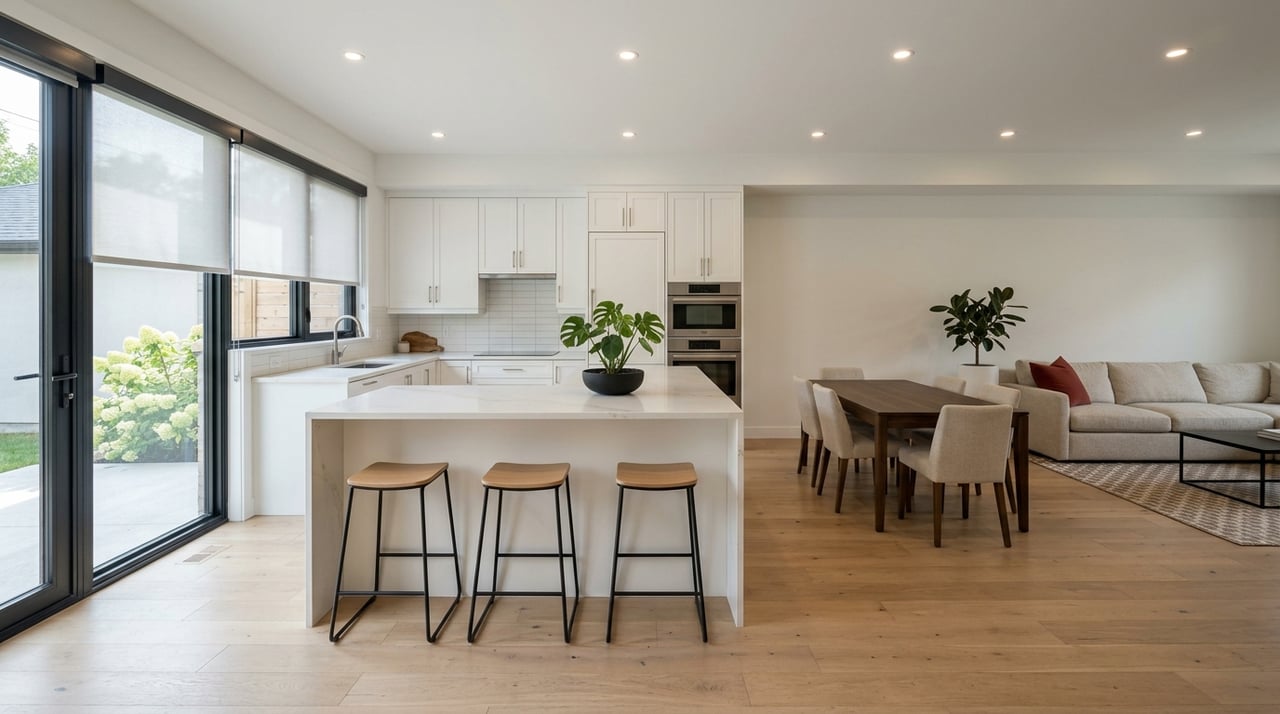
Looking for a family home in Oakville can feel exciting right up until the search turns competitive. You may be balancing space, budget, commute time, and school planning all at once, while trying to act fast when the right home appears. The good news is that a smart, local strategy can make the process much more manageable. Here’s how to approach an Oakville home search with clarity and confidence.
Before you book showings, get clear on what you can comfortably spend beyond just the purchase price. In Oakville, your total cost should include your down payment, closing costs, Ontario land transfer tax, property taxes, and the possible cost of a home inspection.
Ontario land transfer tax applies to purchases in Oakville, and the extra municipal land transfer tax only applies in Toronto. If you qualify as a first-time homebuyer, you may be eligible for a provincial refund of all or part of that tax, up to $4,000 on eligible homes.
Property taxes also matter when you compare home types and price points. Halton notes that property tax bills include municipal, regional, and education portions, and the amount is based on assessed value and the council-approved tax rate. That is one reason a detached home, townhome, or newer build can create very different monthly carrying costs even if they seem close in purchase price.
A home inspection is another line item worth planning for upfront. Ontario describes a home inspection as a visual review of major visible systems and components, and typical fees are about $350 to $600. That cost can be well worth it if the inspection helps you understand the property better before moving forward.
One of the biggest mistakes buyers make is treating Oakville like one single price bracket. It isn’t. Prices vary widely by area, home type, and age of housing stock, so your search gets much easier when you narrow in on neighborhoods that fit your actual budget.
TRREB’s Q4 2025 Oakville community data shows just how wide that range can be. Old Oakville averaged $2.74 million and Morrison averaged $3.16 million, while Bronte averaged $1.41 million, Glen Abbey $1.33 million, West Oak Trails $1.18 million, River Oaks $1.03 million, and Westmount $1.05 million. Clearview and Joshua Creek sat higher as well, at about $1.52 million and $1.57 million.
That spread matters because it changes your options. If your goal is a detached family home in one area, the same budget might also open the door to a different home style or a newer home in another part of Oakville.
For many families, the best move is not jumping straight into the highest-priced detached segment. In Westmount, for example, detached homes averaged about $1.487 million, while attached row and townhouses averaged about $712,000 and condo townhouses about $485,000 in the same TRREB report.
That difference is significant. A townhome can be a practical step for an upsizing family that wants more room, a better layout, or a new location without stretching straight into a premium detached budget.
If you want newer housing stock, North Oakville deserves a closer look. The town’s New Communities of Oakville, located north of Dundas and south of Highway 407, are planned with trails, bike paths, green space, and pedestrian-friendly street design.
The town also describes these communities as part of a broader growth area meant to support housing choice and complete communities. For buyers, that can translate into a more planned neighborhood feel, access to outdoor space, and a wider mix of newer homes.
This part of Oakville can be especially relevant if you value newer layouts, family-sized homes, and proximity to open space. It is also useful if you want to compare newer communities with more established parts of town before deciding what fits your lifestyle best.
Oakville buyers are shopping in a broader GTA market that still shows signs of competition. TRREB reported that in May 2026, sales were up 6.3 percent year over year, new listings were down 18.9 percent, and the MLS HPI Composite was down 6.7 percent. TRREB also noted that buyer competition had likely increased in some neighborhoods as inventory was absorbed.
What does that mean for you? It means preparation matters. If you are serious about securing a family home in Oakville, you want your financing, budget limits, and neighborhood shortlist ready before the right property hits the market.
A focused search is usually stronger than a broad one. Instead of looking everywhere, choose two or three neighborhood clusters that fit your priorities for budget, housing type, commute, and day-to-day lifestyle.
This approach helps you move faster when a listing appears. It also helps you compare homes more clearly because you are evaluating realistic alternatives instead of constantly resetting your expectations.
If school planning is part of your move, verify school assignment by the exact property address before you offer. Do not rely on general assumptions about a neighborhood alone.
That is especially important right now because school boundaries in Oakville are not static. The Halton District School Board reinitiated the Northwest Oakville Elementary Boundary Review on June 2, 2026, with possible implementation as early as September 2027. It also approved new boundaries for Oakville NE #1 Secondary School and French Immersion beginning in September 2027.
For family buyers, this means a school boundary can be a live variable. If a specific school pathway matters to your household, confirm it early so there are no surprises later.
A larger home only feels like the right fit if your daily routine still works. That is why commute planning should be part of your search from the start, not something you figure out after an accepted offer.
Oakville Transit operates a townwide bus network, and Oakville GO remains an important commuter hub. Metrolinx says Oakville GO is the busiest station on the Lakeshore West line and is being renovated to improve access, safety, and service capacity, with the potential for trains as frequently as every 15 minutes or better during the busiest hours.
If you commute to Toronto, Mississauga, or nearby business hubs, transit access can shape which part of Oakville feels most practical. A home that works on paper may feel very different once you test the drive, bus route, or GO station access during your usual hours.
In a competitive market, buyers often feel pressure to make their offer as clean as possible. But the goal is not to remove every condition at all costs. The better goal is to keep the protections that are still necessary for that property and your situation.
Ontario and RECO both advise buyers to think carefully about offer conditions. A financing condition can still matter even if you already have a pre-approval, and buyers may also choose conditions related to a home inspection or the sale of an existing home.
Every property is different. On one home, financing may be your key protection. On another, the home inspection may be the most important because it gives you a chance to evaluate visible elements like the roof, foundation, plumbing, electrical, and HVAC systems.
Having this conversation before offer night helps you act with confidence. When you already know what is essential and what is flexible, you are less likely to make a rushed decision under pressure.
If you are bidding on a desirable Oakville family home, there is a real chance you could face competing offers. In Ontario, the seller’s agent must disclose the number of competing offers to buyers who submitted written offers.
At the same time, RECO notes that sellers can choose whether to share the contents of those offers, and that choice can change during the process. In other words, you may know how many offers exist, but you should not expect full visibility into the terms of competing bids.
That makes your own strategy even more important. Your strongest position usually comes from knowing your ceiling, understanding the property, and submitting terms you can stand behind.
Before you move too far into the process, confirm the brokerage you are working with and review any buyer representation agreement carefully. Ontario’s buyer checklist recommends this step, and RECO notes that these agreements can include details such as holdover and remuneration clauses.
You should understand the services being provided, how long the agreement lasts, and any circumstances that could create dual or multiple representation. Clear expectations at the start can make the rest of your home search feel smoother and more transparent.
A practical Oakville buying plan is usually simple. The key is doing the right steps in the right order so you are ready when the right home appears.
Here is a strong sequence to follow:
This process fits today’s Oakville market conditions and helps reduce last-minute stress. It also gives you a clearer path to making a decision that works for your family now and in the years ahead.
Securing a family home in Oakville is rarely just about being first. It is usually about being prepared, realistic, and focused on the areas and home types that truly match your needs. If you want a calm, informed approach to your next move, Brian Peterson can help you build a smart plan for Oakville.
July 23, 2026
July 23, 2026
July 16, 2026
July 9, 2026
July 2, 2026

June 30, 2026

June 29, 2026
June 25, 2026
June 18, 2026
We strive to educate and empower our neighbors and clients in making one of their biggest investments, purchasing or selling a home.